Before the Album: Music Shared as Singles
Music shared as singles can stand alone, lead into an album or travel beyond it; learn how each form shapes listening and which suits a song.
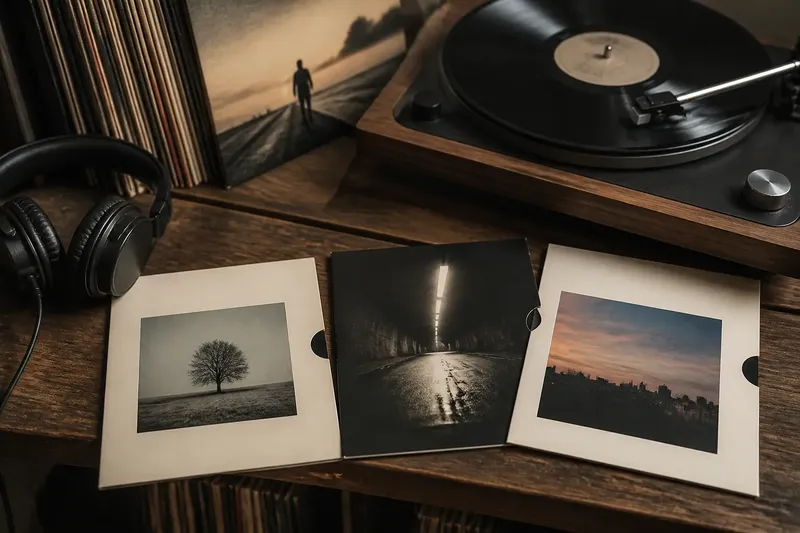
The common mistake with music shared as singles is to treat a track outside an album as a fragment waiting for its proper context. That assumption obscures what the single can do: hold a listener’s attention on one song, give it a life beyond any larger sequence, or invite an audience into an album through a carefully chosen doorway. The format is not merely a smaller album. It is a different way of meeting music.
A single can be understood through three related approaches: the self-contained release, the advance track that points towards an album, and the song that circulates independently of an album altogether. Each gives the music a different frame. Which one makes sense depends less on a fixed rule than on whether the song feels complete by itself, gains meaning from its neighbours, or benefits from travelling without a larger package attached.
A self-contained single gives one song its own frame
The most direct single asks the listener to spend time with one piece of music, without requiring an album’s sequence or argument. The song may have an opening, a recurring refrain, a contrasting passage and a close; it may also be brief, spare or deliberately open-ended. What matters is that the release presents it as the principal event, rather than as a preview of something else.
This kind of single suits a song whose character is easy to grasp in isolation. A strong vocal phrase, a distinctive instrumental sound or a memorable change in the arrangement can give a track a clear identity without explanatory notes from surrounding songs. “Easy to grasp” need not mean simple: a quiet song built around an unresolved harmony can still feel self-contained if its ending leaves the listener with a deliberate impression.
Presentation helps establish that independence. A separate title, cover image, sleeve or release page can make the song feel like an intentional object. In a physical format, the listener may turn over a record or cassette to hear another track, but the featured song still carries the main invitation. In a digital setting, the same song may sit among playlists and recommendations, where its identity comes from its own sound and metadata rather than a shared album cover.
There is a useful distinction between a song that stands alone and one that is merely released alone. If a track depends on another song’s ending, reprises an earlier motif without establishing it, or feels like a passage removed from a longer arc, its separate appearance may sound less complete. That need not make the release unsuccessful; it simply means the listener is hearing an extract from a wider design rather than a compact statement.
Imagine a songwriter finishing a song whose chorus returns with a changed final line and whose instruments fall away at the close. Released by itself, that final variation can feel like a satisfying answer to the song’s opening. If the same track is placed between two pieces that deliberately continue its story, it may instead sound like one scene in a larger sequence. The audio has not changed; the frame has.
An advance single turns one song into an album entrance
A second approach places a song ahead of an album, using it to establish the kind of listening the larger work will ask for. The track may introduce a recurring sound, present the album’s most immediate melody, or deliberately offer a different face from the material around it. Its job is not simply to summarise the album. It creates a first impression while leaving room for the album to revise that impression.
This approach suits artists and listeners who value the relation between a particular song and a wider sequence. A track with a clear identity can draw attention, while the album later gives that identity extra colour. A spare opening single might seem unusually restrained until the listener hears the fuller arrangements nearby. Conversely, a forceful track can make a quieter album feel more varied once the whole sequence is available.
Release order and listening order are not the same thing. An advance single reaches people first in calendar time, but it does not have to lead off the album. If it appears midway through the final sequence, its original role may have been to announce the project, while its album role is to change the pace or deepen a theme. Keeping those two functions distinct helps explain why a single may feel different when heard in its eventual surroundings.
The album can also alter a song’s apparent scale. A recurring instrument, lyrical image or rhythmic gesture may connect the single to other tracks, even if those links are subtle. A listener who hears the single first might notice its hook; a listener who encounters it after the full sequence might hear it as a return or a contrast. Neither response cancels the other. They are different consequences of meeting the same song at different points.
There is a trade-off. A track selected chiefly because it is immediately approachable may not represent the album’s more unusual textures, while a track that mirrors the album closely may reveal less of the range to come. The choice rests on what the release should promise: a memorable point of entry, a faithful sample of the larger work, or a deliberate misdirection that gains meaning later. The best fit depends on the album’s character, not on a universal formula for choosing a lead song.
An independent track travels without an album sequence
The third approach is a song released or encountered without an album serving as its main destination. It may be a standalone release, a song that later appears on a collection, or a track heard through a playlist, radio programme or shared link without the surrounding material. Here, the single is not merely the first piece of a forthcoming album campaign. It is a complete meeting between listener and song, even if the song has other versions or later homes.
This approach suits material that grows out of a particular moment, collaboration or experiment and does not need to be folded into a longer statement. It can also suit listeners who build their own paths through music rather than beginning with artist albums. A song encountered among unrelated tracks has to establish its atmosphere quickly, but it may then acquire unexpected associations from what came before and after it in that listener’s chosen sequence.
That change in surroundings is part of the format’s history and continuing appeal. Singles have long made it possible to encounter music one song at a time, through forms of circulation that differ from buying or playing a complete album. The precise route varies by place and medium: a record shared between listeners, a broadcast, a shop display, a playlist or a direct digital release can each give the song a different social setting. The central feature remains the same: the listener can meet the track without first accepting an album’s full order.
Independent circulation can give a song several useful lives. It may be heard alone, paired with a companion track on a physical release, added later to a collection or placed by a listener beside music from other artists. Each context can alter its emphasis. A song’s rhythm might seem unusually relaxed after a busy track and more insistent after a quiet one, much as the same lamp changes the feel of a room when moved from a desk to a hallway.
But freedom from an album brings a different kind of responsibility to the song’s arrangement. Without adjacent tracks to establish an atmosphere, its own changes of texture and energy carry more of the listening journey. That does not mean every single needs a dramatic opening or a neatly resolved ending. It means that small choices—a vocal entering late, a refrain returning at a new volume, a final sound allowed to linger—can do the work that an album sequence might otherwise share across several tracks.
Choose the single format by asking what the song needs
The practical choice begins with the song’s relationship to context. A self-contained release is a natural fit when its main idea, development and close form a satisfying encounter. An advance single makes more sense when hearing the song early can open a path into an album, and when the larger sequence adds something worth discovering. An independent track suits a song whose life need not depend on either a companion album or a place within one.
A listener can make the same distinction. If a song feels complete on its own, there is no need to hunt for an album before enjoying it. If its sounds or images seem to point beyond themselves, hearing the surrounding tracks may reveal connections. If it turns up among unrelated music, notice how its identity survives—or changes—when the neighbours change. These are different forms of attention, not competing claims about which format is more serious.
For artists deciding how to present a song, a few questions help clarify the choice:
- Does the song establish its own beginning and ending? If its central idea feels clear without outside context, a self-contained release may suit it.
- Does another track change what this one means? If a motif, narrative or contrast depends on neighbouring songs, consider how the album sequence contributes.
- Should the release invite listeners towards a larger work? If so, an advance single can act as an entrance without needing to explain the whole album.
- Would the song gain something from meeting unrelated music? If its character remains vivid across changing surroundings, independent circulation may fit.
- Does the artwork and release information present the song as a distinct object? A clear title, cover and track description can help listeners recognise whether they are hearing a standalone release, an album preview or one part of a larger set.
These questions are prompts, not a scoring system. A song can answer them in more than one way. It might first appear alone, then take on a new role when collected with other tracks; an advance single can also become a listener’s favourite independent of the album. The format names the initial invitation, not every later use the music will find.
Why do singles still change how a song is heard?
What makes a song a single rather than an album track?
The distinction is usually one of release and presentation, not a particular musical structure. A single is foregrounded as an individual song, while an album track is primarily encountered as part of a larger collection, though the same song can occupy both roles.
Does an advance single need to lead off the album?
No. Its early release may introduce the album, while its eventual position serves a different purpose in the sequence. A track can be an entrance in one setting and a turn or contrast in another.
Can a single later belong to an album?
Yes. A song first shared on its own may later appear on an album or collection, where its neighbours change the way listeners interpret it. Its independent release remains part of its listening history, even after it gains a larger context.
Why hear a single outside its original setting?
Listening beyond the original release context shows how much of the song’s identity comes from its own arrangement and how much comes from its neighbours. That comparison can make a familiar track feel newly self-contained, or reveal the connections that its first presentation left unspoken.
Music shared as singles offers more than a convenient way to release one track at a time. It lets a song arrive as a complete statement, as an entrance to a larger work or as a piece that can travel between listeners and settings without settling into a single sequence. The useful question is not whether a song belongs to a single or an album forever, but what kind of first encounter best lets its character be heard.